

The History of the Stahl House, One of LA’s Most Famous Modern Homes
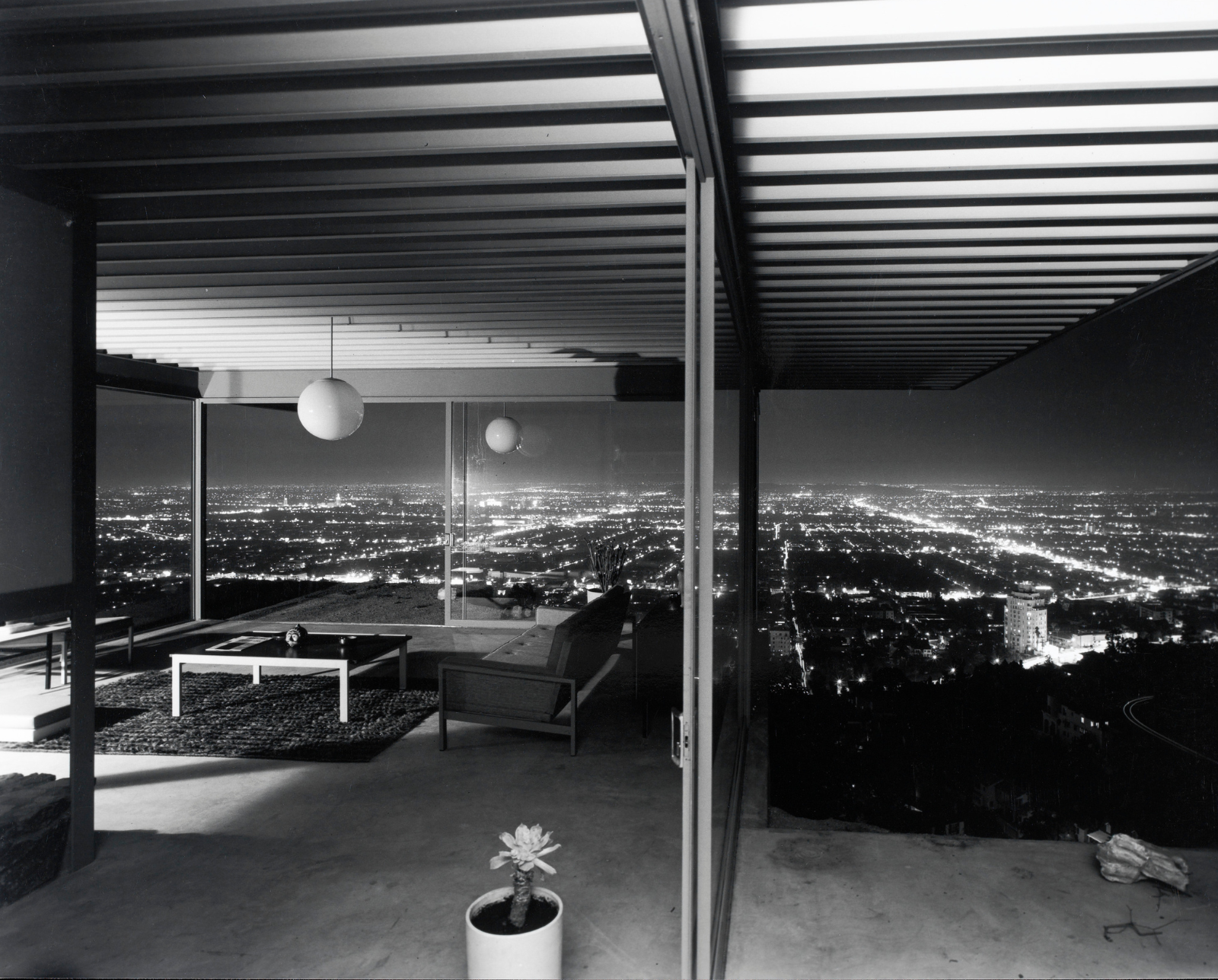
Many people know the Stahl House through its iconic black and white photograph. Julius Shulman’s image from 1960 depicts two women sitting in a glass living room above the far-flung city lights of Los Angeles. The great metropolis spreads outward in every direction, while the house appears to hover over the hillside, suspended in mid-air like a plane in flight. That photograph circulated widely through both pop culture and architecture. Through it, Shulman fixed the building in our public imagination as an enduring symbol of mid-century California modernism.
The house itself sits above West Hollywood at 1635 Woods Drive. Architect Pierre Koenig designed it in 1959 for Buck and Carlotta Stahl, who fell in love with the lot but struggled to find a willing architect. Construction finished in 1960, shortly after the project entered the Case Study House program as Case Study House #22. Today, the Stahl House still stands on its original cliffside lot overlooking the Los Angeles basin. A steel-and-glass structure that has barely changed since the day Koenig completed it, Stahl House is one of few remaining Case Study Houses in an area ravaged by mudslides, wildfires, and rampant development.
How the Historic Stahl House Was Built on a Hillside Lot Most Architects Avoided
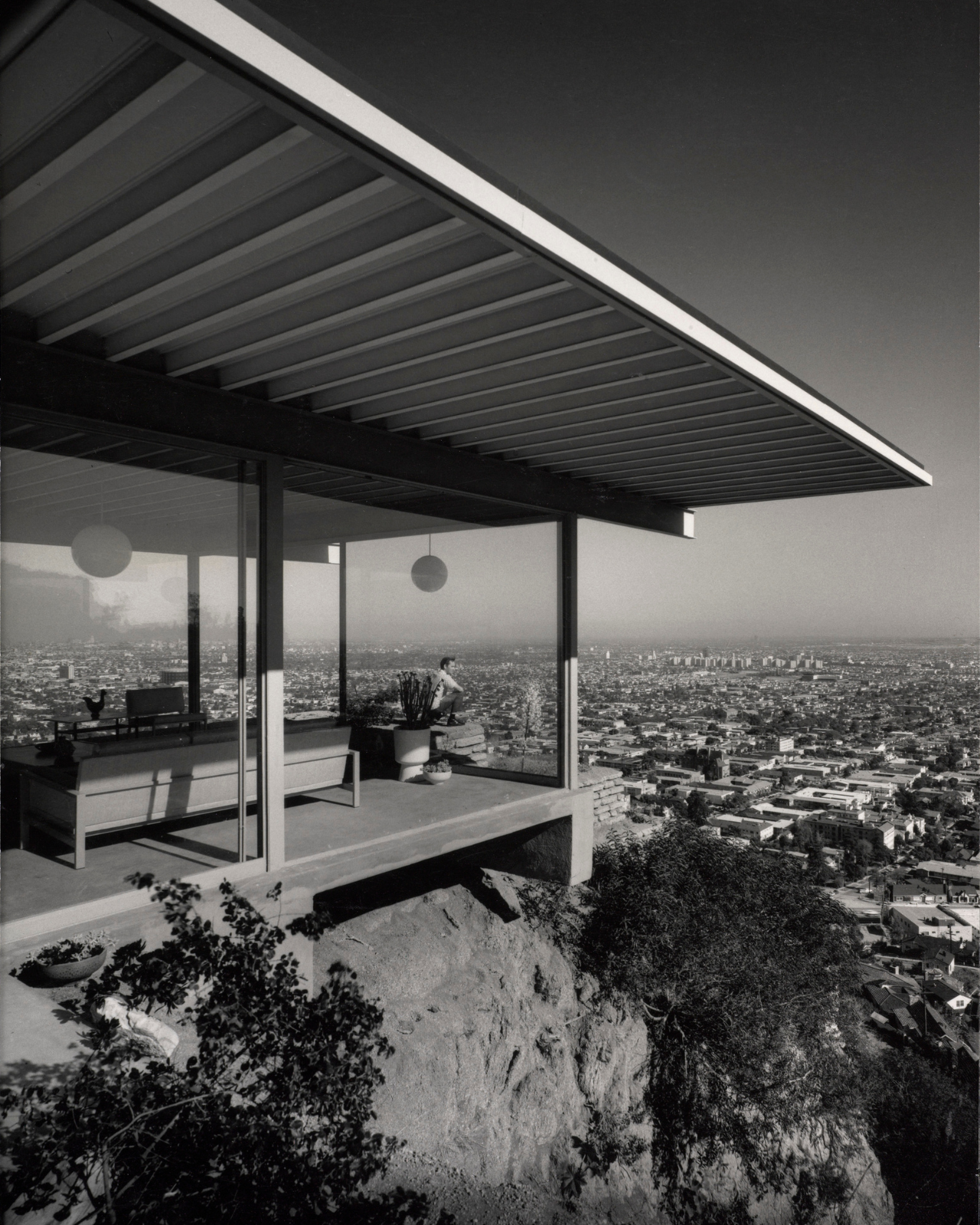
Case Study House No. 22 (Stahl House), Los Angeles, 1960. Photograph by Julius Shulman. © J. Paul Getty Trust. Getty Research Institute, Los Angeles (2004.R.10).
Stahl House's history actually begins several years before its construction in mid-century Los Angeles. In 1954, Buck and Carlotta Stahl purchased a steep hillside lot above their small rental home in the Hollywood Hills. The land cost about $13,500. At the time, the property was not particularly desirable. Its slope made construction complicated, and the site required substantial grading before any house could be built.
Buck Stahl took on that work himself. In a PBS interview, Shari Stahl later recalled that her father spent nearly three years building the retaining walls himself. He drove around Los Angeles collecting discarded concrete blocks from construction sites, loading them into his convertible and hauling them up the hill to expand the buildable footprint of the lot. During those long hours, he watched the light change over Los Angeles and imagined what a house might look like on that ridge. The couple wanted a home with large expanses of glass that would frame their panoramic view of the city.
Several architects reportedly declined the commission because of the difficult building site. Pierre Koenig did not.
The View That Shaped the Entire Design
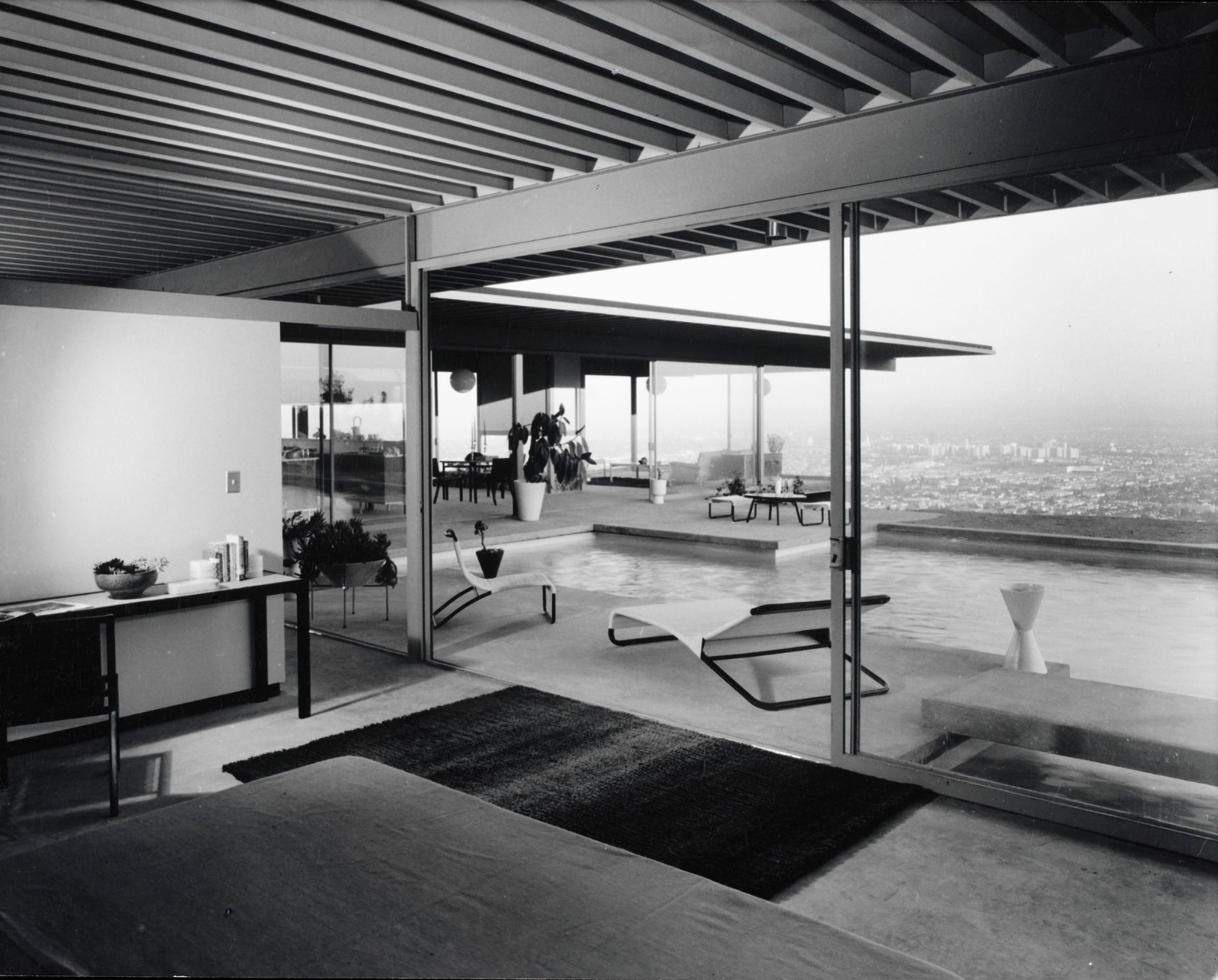
Case Study House No. 22 (Stahl House), Los Angeles, 1960. Photograph by Julius Shulman. © J. Paul Getty Trust. Getty Research Institute, Los Angeles (2004.R.10).
From the beginning, the Stahls were less interested in building a large house than in building the right one for that particular ridge. The view was the entire point of this property. Downtown Los Angeles stretched across the basin, and the hills rolled away toward the horizon. Buck Stahl wanted a house that would not interrupt that unique experience.
Shari Stahl later explained that her father was clear and unwavering about this goal from the start. Quoting Buck, she told PBS's Artbound, “'I want to be able to stand in the living room and look at my view with only turning my head. I don't want anything obstructing it. I don't want walls. I want glass.'”
That singular request shaped nearly every decision that followed. The house would need expansive glazing. The structure would have to support large panes of glass without bulky framing. And the building itself would have to sit lightly on the land so that the view remained the dominant feature of the space. But who could bend a home to the hillside's will and Buck Stahl's demands when many architects were still using wood for framing?
Finding Pierre Koenig
The Stahls initially struggled to find an architect willing to take on the project. Several architects visited the lot but concluded that the terrain made construction impractical, especially if the house relied heavily on uninterrupted panes of glass.
But the tide turned in their favor when Carlotta Stahl came across an article in the Los Angeles Herald Examiner about a young architect experimenting with steel construction. That architect was Pierre Koenig. When the Stahls contacted him, Koenig visited the site and immediately embraced the challenge no one else would even consider. According to the Los Angeles Conservancy, Koenig viewed the cliffside location as “an advantage rather than an impediment,” making him the right man for the job.
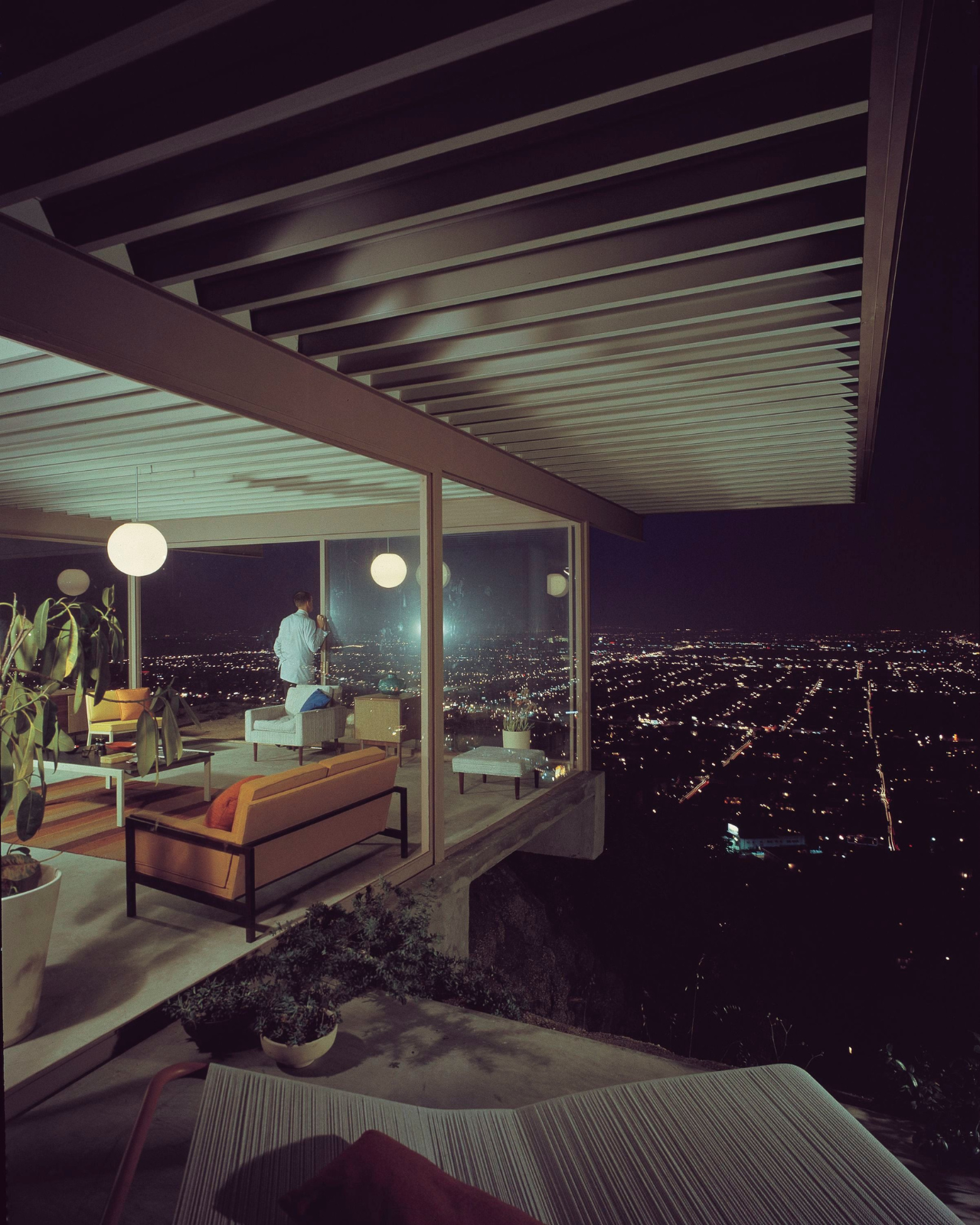
Case Study House No. 22 (Stahl House), Los Angeles, 1960. Photograph by Julius Shulman. © J. Paul Getty Trust. Getty Research Institute, Los Angeles (2004.R.10).
Shari Stahl later described how Koenig arrived enthusiastic about the project and confident that the design the Stahls imagined could actually be built. In her words, he was “a renegade just like my father.” Koenig was still early in his career at the time. Yet his interest in steel construction aligned perfectly with the Stahls’ desire for large glass walls and an unobstructed view. The partnership materialized on a lark, yet it worked almost immediately.
The Loan That Made the House Possible
Designing the house turned out to be easier than financing it. Banks repeatedly rejected the project because they deemed the site too risky; blowing the budget seemed likely. The steep hillside, combined with the unconventional steel-and-glass design, made lenders wary of lending to the Stahls.
Eventually, Pierre Koenig found a lender willing to take the risk. Financing came from Broadway Federal Savings and Loan, a Black-owned bank founded in Los Angeles during the 1940s. The institution had been created by African American civic leaders in response to discriminatory lending practices that prevented many Black families from obtaining mortgages across LA.
According to reporting from KCRW's Greater LA program, Broadway Federal focused specifically on financing opportunities that were often denied elsewhere. Over time, it became one of the most historically significant financial institutions in Los Angeles.
The loan adds an unexpected historical irony to this home's legacy. At the time the Stahl House was financed, restrictive housing policies still shaped where people of color could live in Los Angeles. Yet the institution willing to fund the project was a bank founded to fight those very barriers. Without Broadway Federal's decision, construction of the Stahl House might never have begun, and LA would be without one of its most iconic buildings.
Entering the Case Study House Program
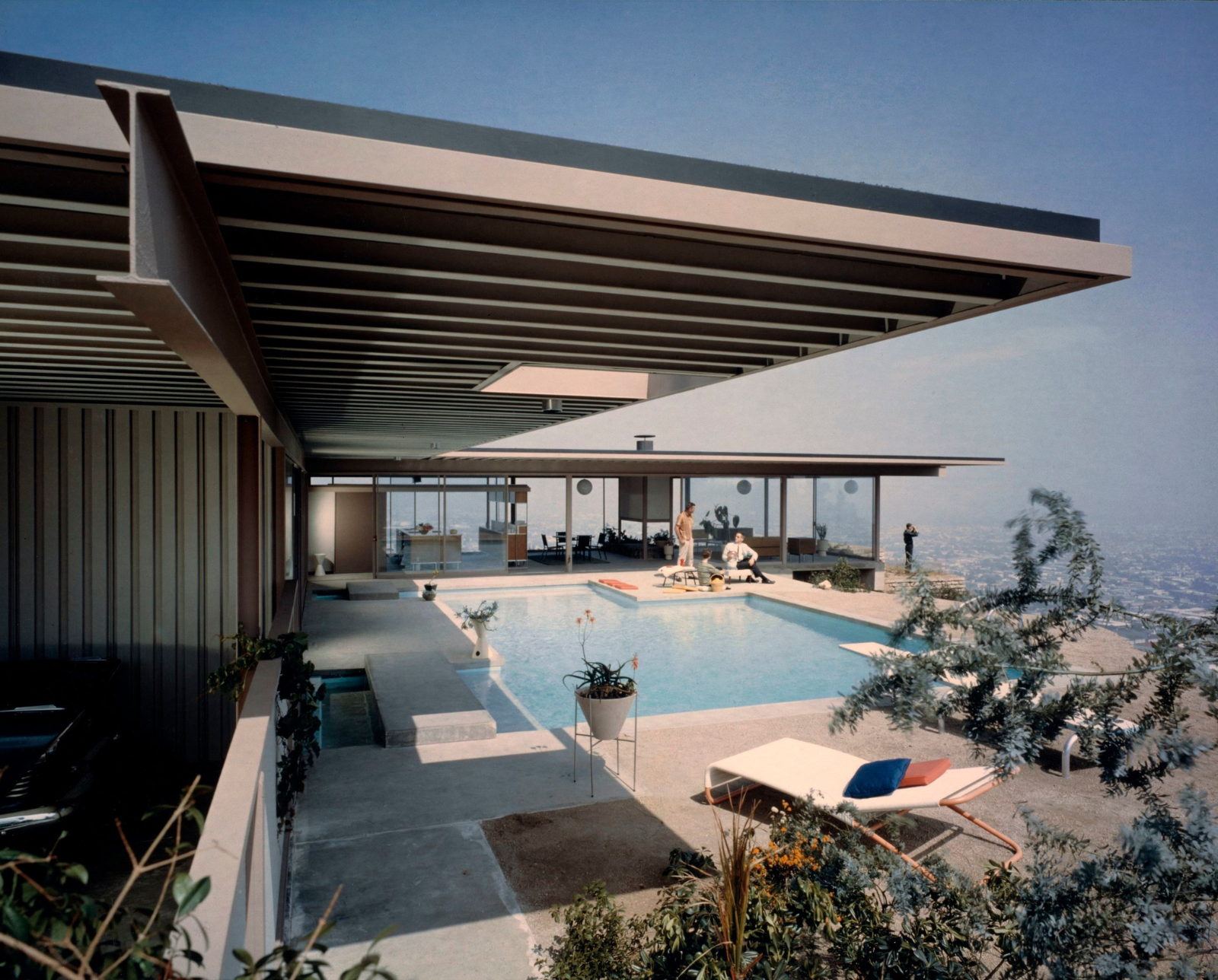
Case Study House No. 22 (Stahl House), Los Angeles, 1960. Photograph by Julius Shulman. © J. Paul Getty Trust. Getty Research Institute, Los Angeles (2004.R.10).
As its design developed but before their crew broke ground, the Stahl House caught the attention of John Entenza, editor of Arts & Architecture. Entenza had launched the Case Study House program in 1945 to explore new models for postwar housing. The program invited architects to experiment with modern materials and efficient building techniques that might eventually influence mainstream residential construction. Over the years, architects like Richard Neutra and Charles and Ray Eames contributed designs.
Koenig’s Stahl House (the second property of his to be invited) joined the program in 1959 as Case Study House No. 22. The designation helped introduce the project to a wider architectural audience and placed it within a larger conversation about modern living in postwar America. Koenig's selections of steel framing, open planning, and expansive glazing all reflected the program’s interest in industrial materials and new approaches to domestic space.
Steel, Glass, and a House Built (Almost) in One Day
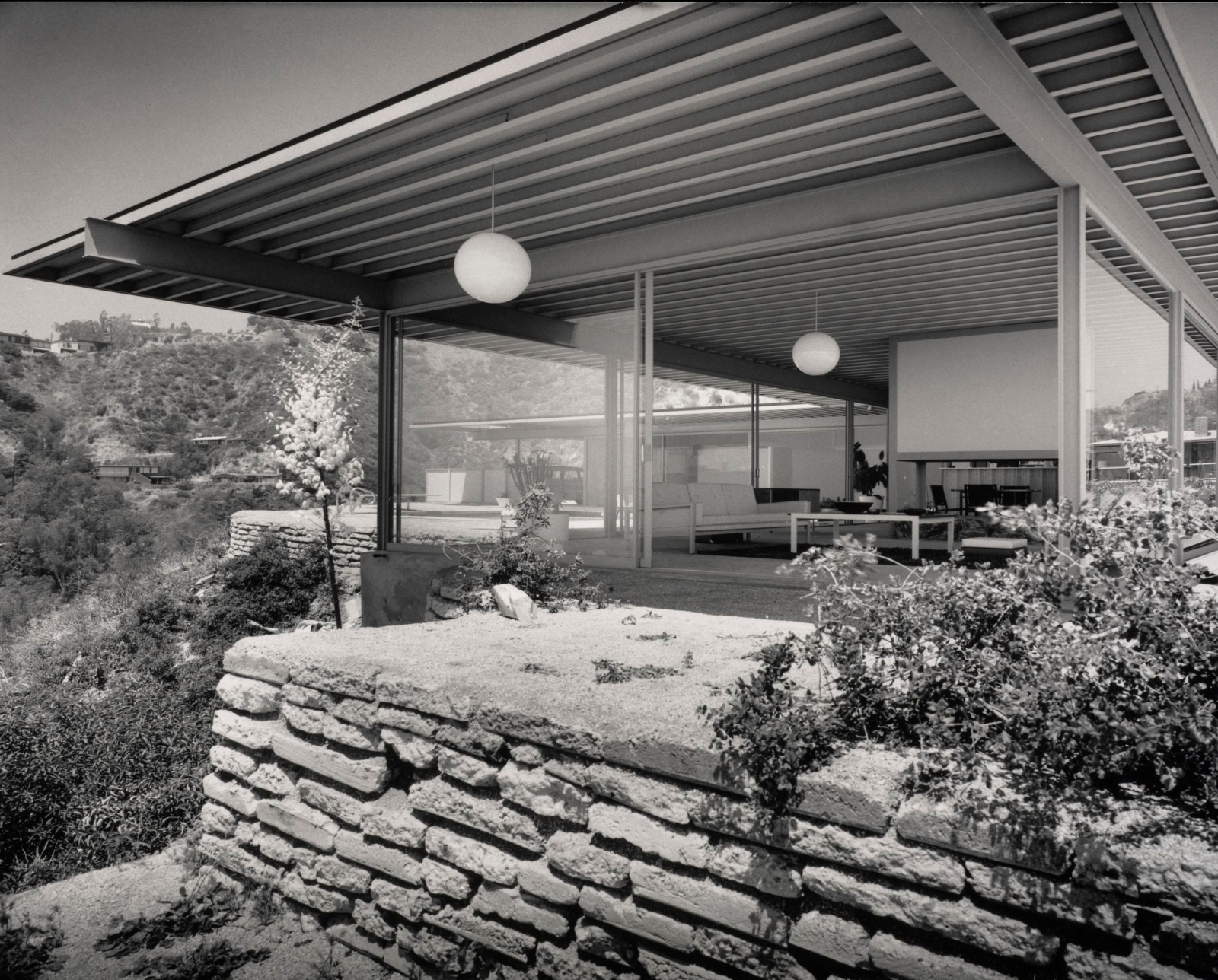
Case Study House No. 22 (Stahl House), Los Angeles, 1960. Photograph by Julius Shulman. © J. Paul Getty Trust. Getty Research Institute, Los Angeles (2004.R.10).
Koenig approached the project with a strong interest in efficiency. Instead of relying on custom fabrication, he designed the structure using standardized steel components commonly used in commercial construction. Large steel beams created the framework of the house and allowed expansive panes of glass to replace traditional exterior walls. The system also eliminated the need for interior load-bearing walls, so living spaces were left open and visually connected to the landscape outside.
According to accounts from the Stahl family, the steel-framed house went up remarkably quickly. “The framing of all the steel went up in a single day with three guys,” Bruce Stahl later recalled. Of course, construction of the full house took roughly a year. When finished in 1960, the building measured just over 2,200 square feet and boasted two bedrooms, two bathrooms, and a dramatic terrace overlooking the city.
The Julius Shulman Photograph That Made Stahl House Famous
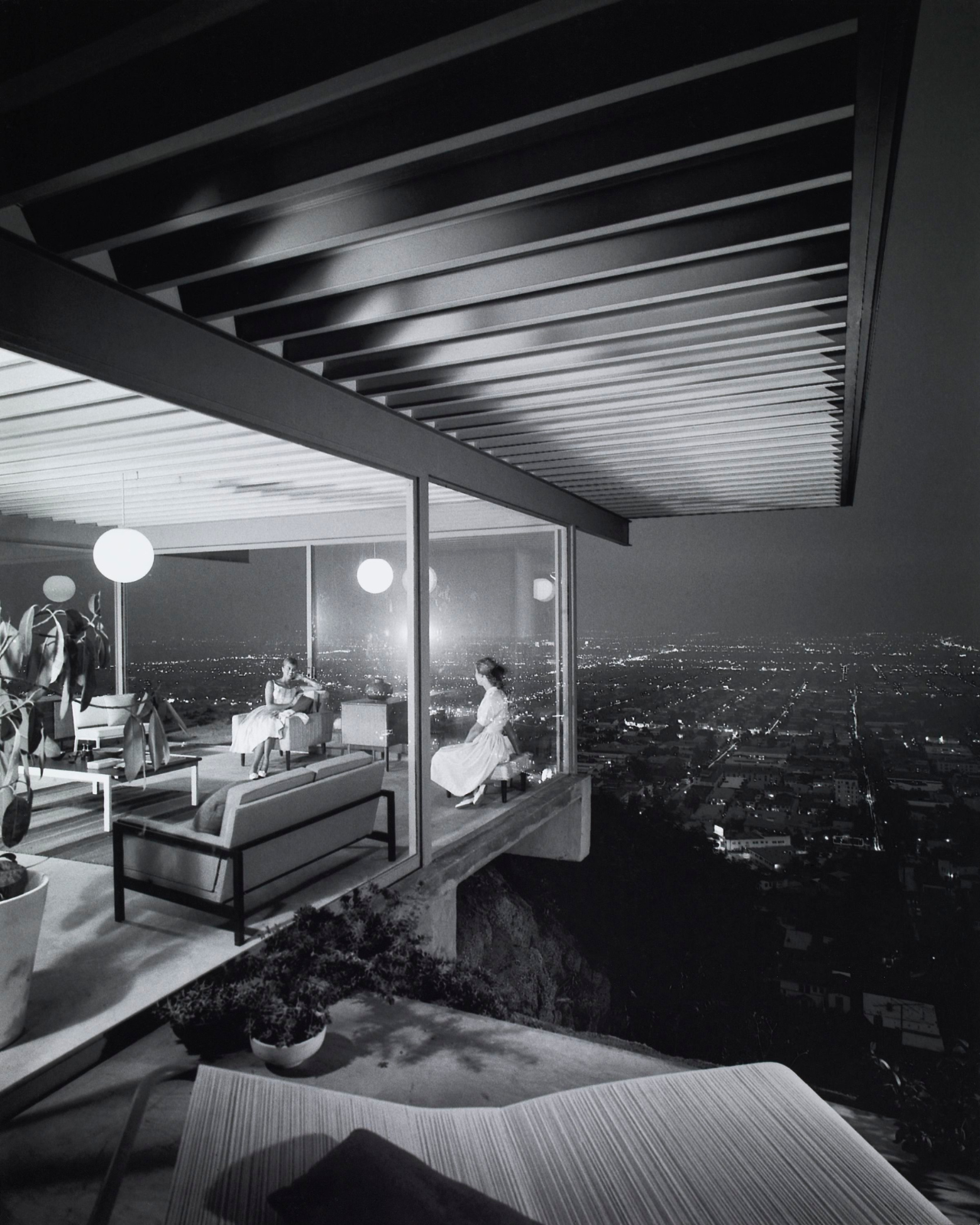
Case Study House No. 22 (Stahl House), Los Angeles, 1960. Photograph by Julius Shulman. © J. Paul Getty Trust. Getty Research Institute, Los Angeles (2004.R.10).
The Stahl House might have remained an admired architectural project and cherished family memory if not for a single photograph. In 1960, architectural photographer Julius Shulman arrived to document the newly completed house. Instead of photographing the building during the day, he waited until evening. The interior lights illuminated the glass living room while the city lights of Los Angeles glittered in the distance.
Two women sat casually inside the corner of its living room. Steel beams framed the composition but retreated into the background to make the glowing house appear as if it hovered untethered above the dark hillside. Shulman carefully staged the image that evening. The two women sitting in the living room were not residents of the house but assistants from his studio who agreed to pose for the photograph. These figures also helped establish scale, allowing viewers to understand the size of the glass room and the depth of the city beyond it. Quoted by Fiona Ng in an LAist article, Shulman said "'It was not an architectural quote-unquote 'photograph...It is a picture of a mood.'”
This photograph circulated widely in magazines and architectural publications. Over time it became one of the most recognizable images in architectural photography. For many people, that single image defined both Southern California living and modern architecture. Bruce Stahl later remarked that the famous corner where visitors recreate the photograph had a more ordinary, yet equally impactful, role in family life. “That’s also where our family Christmas tree sat,” he said.
Life Outside Shulman's Lens: What a Childhood at Stahl House Was Really Like
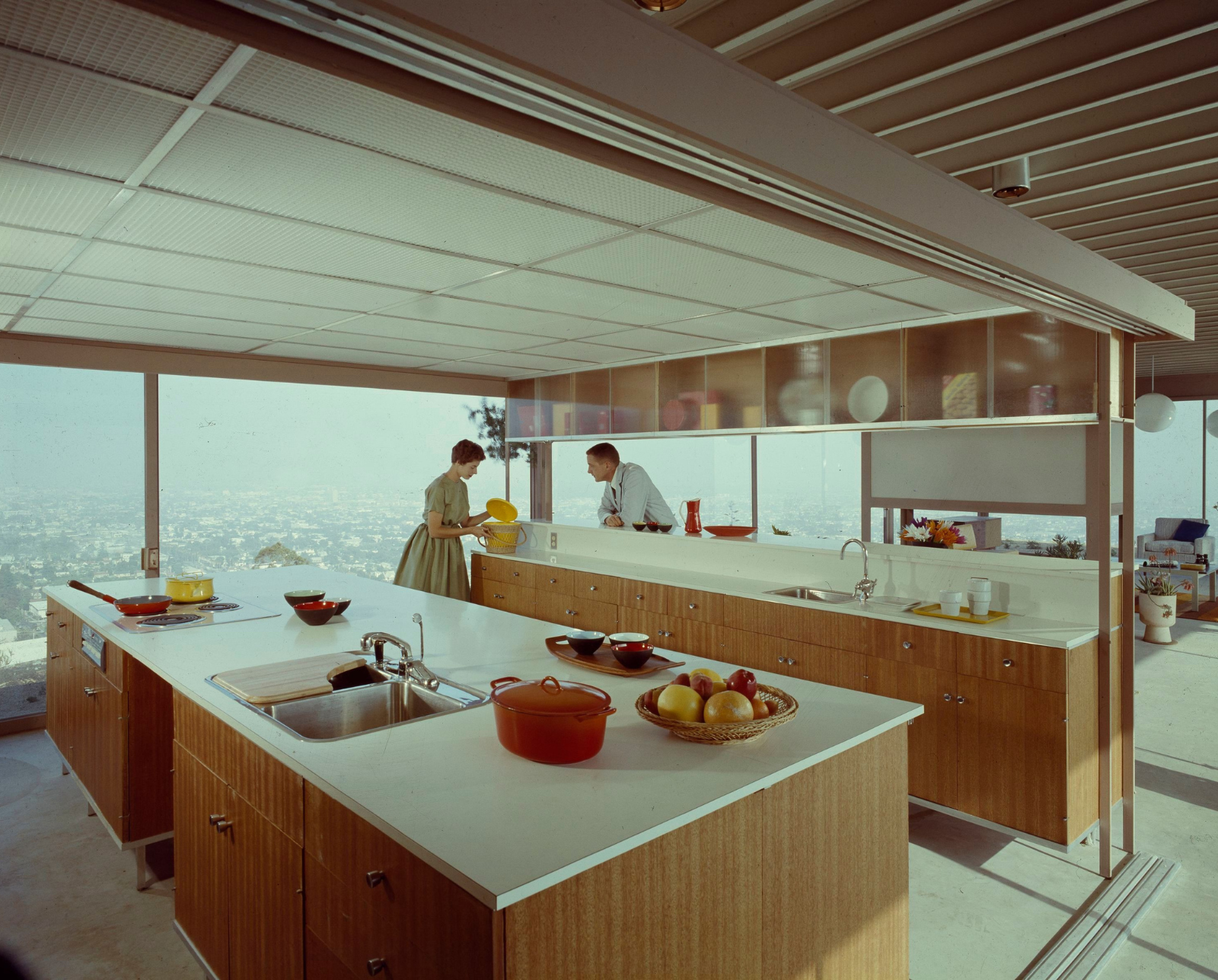
Case Study House No. 22 (Stahl House), Los Angeles, 1960. Photograph by Julius Shulman. © J. Paul Getty Trust. Getty Research Institute, Los Angeles (2004.R.10).
Despite its growing fame, the Stahl House functioned first as a family home. Buck and Carlotta Stahl raised their children there, and the foursome's daily life was set against the same sweeping city views that fascinated visitors.
As the Stahl children told Fiona Ng last year in an article for LAist, "This home has been the center of our lives for decades." A few years earlier, Bruce Stahl recalled that living in the house felt completely normal at the time. The children spent long days swimming in the pool and playing around the property. With no fence separating the house from the terrace, they learned to respect that landscape right away.
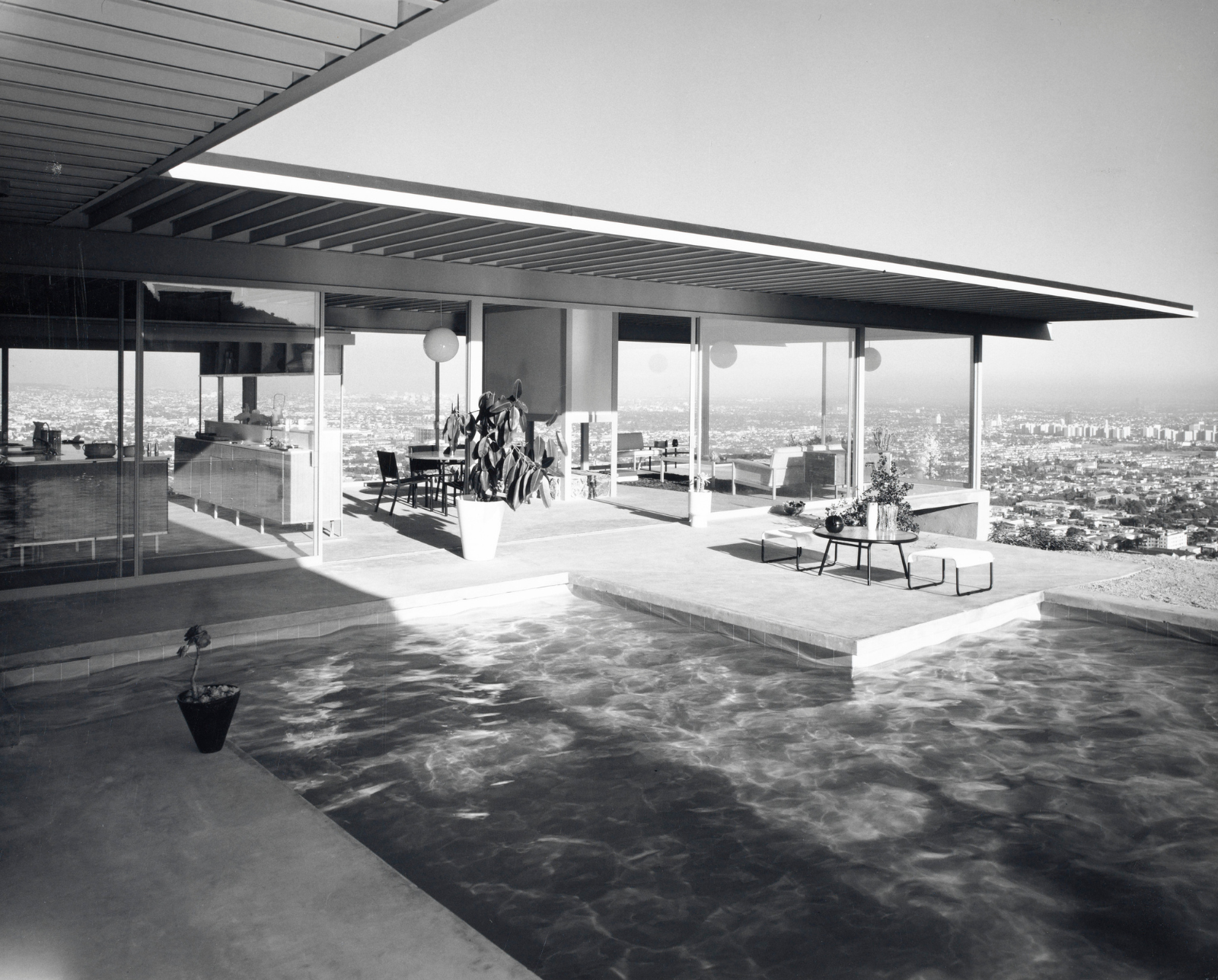
Case Study House No. 22 (Stahl House), Los Angeles, 1960. Photograph by Julius Shulman. © J. Paul Getty Trust. Getty Research Institute, Los Angeles (2004.R.10).
But their father was a bit of a thrill-seeker and risk-taker (as the house itself might suggest); he expressed those qualities with one particularly memorable tradition. Buck Stahl occasionally climbed onto the roof and jumped into the deep end of the pool below. Before jumping, he would shout the same advice each time.
“Aim for the drain,” he told his children. Over time, the tradition continued with grandchildren and visiting friends.
Preservation and the Future of the Stahl House
Case Study House No. 22 (Stahl House), Los Angeles, 1960. Photograph by Julius Shulman. © J. Paul Getty Trust. Getty Research Institute, Los Angeles (2004.R.10).
The Stahl House remained in the Stahl family for more than six decades. That continuity helped preserve its original design with relatively few alterations, which is quite uncommon in historic architecture. In recent years, the family opened their dream house periodically for guided tours as a way to fund ongoing maintenance. However, Stahl House still hit the market (and graced headlines published by every real estate outlet in the US) last year.
In an article for Galerie from December 2025, Mary Elizabeth Andriotis shared a statement made by Bruce and Shari Stahl (Gronwald). The siblings wrote, “After 65 years, our family has made the heartfelt and very difficult decision to place the Stahl House on the market." They explained that preserving the historic property to the standard it deserves had become increasingly demanding over time.
The house also survived through decades during which many other Case Study Houses disappeared. Some were heavily altered, while others were demolished as Los Angeles development intensified during the late twentieth century. Fires, mudslides, and redevelopment gradually reduced the number of intact examples across Southern California. Stahl House stands among the few that still closely reflect their original design.

Case Study House No. 22 (Stahl House), Los Angeles, 1960. Photograph by Julius Shulman. © J. Paul Getty Trust. Getty Research Institute, Los Angeles (2004.R.10).
Despite Entenza's insistence that every Case Study house be "in no sense be an 'individual' performance," the Stahl House is incredibly unique. More than sixty years later, the house still embodies a very specific moment in American architecture and LA history. Stahl House is an artifact of its period, yet it feels strangely suspended outside time. But beyond its romantic reputation and above all else, Stahl House was a family home. Its living room opens directly toward the basin, turning an iconic city into the backdrop of everyday life.
*Featured Image: George Townley Stahl House Museum-Quality Giclée Print

